Obsessive-Compulsive Disorder (OCD) affects around 1 to 2 % of population worldwide. It is characterised by distressing thoughts (obsessions) and repetitive behaviors (compulsions). While the exact cause remains unknown, a combination of genetic, environmental, and psychological factors contributes to its development.
In this article, Asha Psychiatry Clinic ( Dr. Srikanth Bandari, specialists in treating mental health challenges such as OCD, anxiety) , have suggested key points for treating OCD effectively.
What is OCD
- It is a mental health condition involving persistent, unwanted thoughts (obsessions) and repetitive behaviours (compulsions).
- Obsessions cause significant anxiety, and compulsions are performed to alleviate this distress.
- Common obsessions: fear of germs, aggressive thoughts, doubt about actions, need for symmetry.
- Common compulsions: excessive cleaning, checking, counting, or arranging objects.
Causes Of OCD
- Cognitive Factors: Dysfunctional beliefs about control and responsibility.
- Genetic Factors: Family history may increase the risk.
- Neurological Factors: Differences in brain function and structure.
- Environmental Triggers: Stressful or traumatic events.
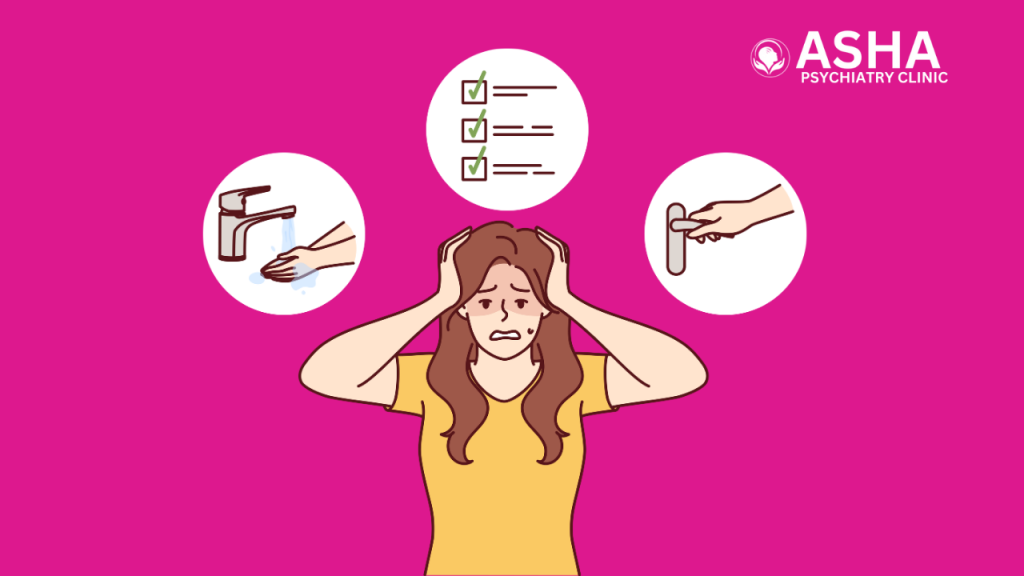
OCD Key Symptoms
- Obsessions: Intrusive, unwanted thoughts or urges or images(e.g., fear of germs, aggressive thoughts).
- Fear of contamination or germs.
- Unwanted aggressive or s*e*x*ual thoughts -blasphemy.
- Doubts about completing everyday tasks (locking doors, turning off appliances).
- Compulsions: Repetitive behaviours aimed at reducing anxiety (e.g., excessive cleaning, checking).
- Excessive cleaning or washing.
- Checking and rechecking actions.
- Counting or ordering items in a specific way.
How to Prevent OCD: Insights by Dr. Srikanth Bandari, Psychiatrist
While OCD cannot always be prevented, certain strategies can reduce its risk and impact. Dr. Srikanth Bandari, a top-rated psychiatrist, has suggested the best prevention method for Obsessive-Compulsive Disorder (OCD) based on his experience.
- Early Intervention
- Seek professional help when early signs appear (e.g., mild compulsions or recurring thoughts).
- Addressing symptoms early can prevent the full onset or reduce the severity.
- Stress Management
- Learn stress reduction techniques: mindfulness, meditation, deep breathing, yoga.
- Manage stress to avoid triggering or worsening OCD symptoms.
- Maintain Healthy Routines
- Get adequate sleep, exercise regularly, and follow a balanced diet.
- Good physical health promotes mental well-being, reducing risk factors for OCD.
- adequate sunlight exposure.
Treatment Options for OCD
Asha Psychiatry Clinic, led by Dr. Srikanth Bandari, provides world-class, advanced treatments to help individuals manage OCD and live fulfilling lives. We can proudly say that we offer a variety of treatment options, including psychiatry medications tailored to each patient’s specific condition.
- Transcranial Magnetic Stimulation (TMS):
- Non-invasive treatment using magnetic fields to stimulate specific brain areas linked to OCD.
- Can improve symptoms, especially in patients not responding to other treatments.
- Virtual Reality Therapy (VRT):
- Uses immersive virtual environments for controlled exposure to triggers.
- Enhances traditional Exposure and Response Prevention (ERP) therapy.
- Cognitive Behavioral Therapy (CBT):
- Exposure and Response Prevention (ERP) – the most effective form of CBT for OCD.
- Gradual exposure to obsessions without allowing compulsive responses reduces anxiety over time.
- Medications:
- SSRIs (Selective Serotonin Reuptake Inhibitors) like fluoxetine and clomipramine are commonly prescribed.
- In treatment-resistant cases, antipsychotic medications may be added.
- Mindfulness and Relaxation Techniques:
- Mindfulness-based interventions help individuals manage intrusive thoughts without reacting.
- Relaxation techniques like jacobson progressive muscle relaxation reduce anxiety and stress.
Conclusion
- OCD can significantly impact daily life.
- Early intervention and a combination of therapies can help manage symptoms.
- Seeking professional help is crucial if you or someone you know experiences symptoms of OCD.
- With proper treatment, individuals can lead meaningful, productive lives.
Dr. Srikanth Bandari is a psychiatrist specialized in OCD and anxiety disorders, providing evidence-based treatment for mental health challenges.
If you have any queries feel free to contact Asha Psychiatry Clinic, Lingampally. Hyderabad.